Planning a Queer Wedding That Actually Feels Like You
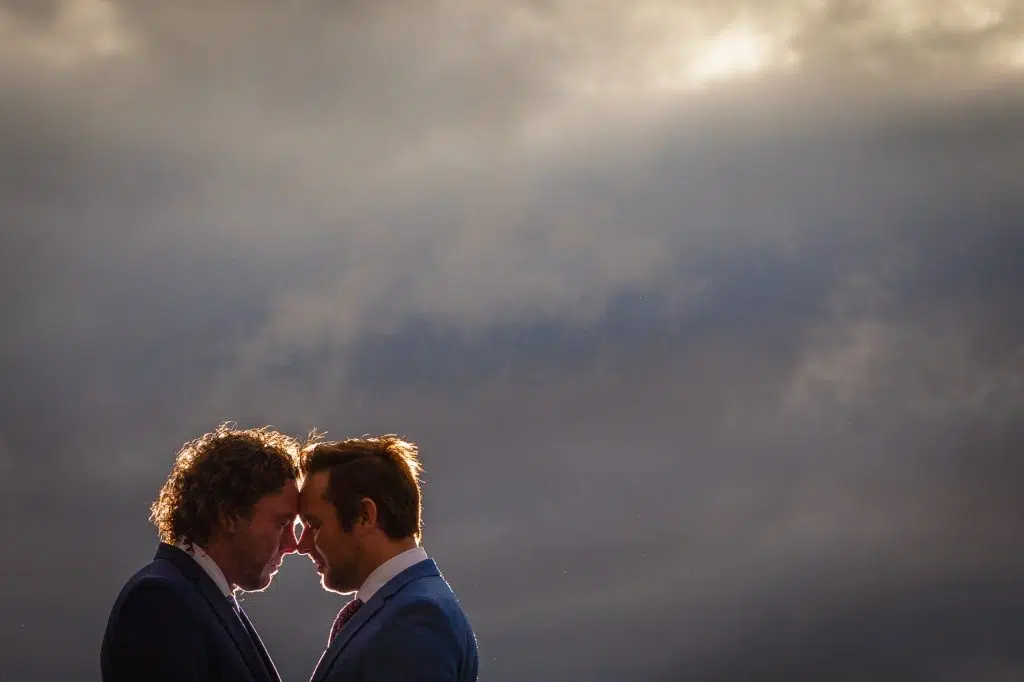
Welcome to my LGBTQ+ wedding guide. I want to start by saying that there is no one way to plan an LGBTQ+ wedding, and you do have the freedom to curate a day that centres on all of the things that bring you joy. However, if you are one of the many queer couples who have started to plan their special day only to feel a little left out and alienated by the wedding industry, you are sadly not alone. Wedding media can still be incredibly heteronormative and can negatively impact how you experience wedding planning.
I want to reassure you first of all that there are so many incredibly inclusive wedding suppliers who will elevate and celebrate your love, so you do not need to compromise when it comes to finding your dream vendors. In this guide, I will help you gain clarity and control over the choices you make as you plan your LGBTQ+ wedding, so that it is filled with love, joy and your wonderful personalities.
Queer does not have to mean quirky, unconventional or alternative. In fact, the LGBTQ+ weddings I love photographing are beautifully styled, with subtle tweaks to bring a deeper meaning to the day.
It’s not about planning a ‘gay wedding’. It’s about planning your wedding in a way that feels right for you.

LGBTQ+ Wedding Traditions & Gendered Roles
Weddings are filled with traditions and, whilst they can help shape and plan your day, they can also feel obsolete or irrelevant to your relationship and/or how you identify. Please remember that traditions are not rules. Very few things that happen at a wedding are legally necessary, which means you do not have to follow any tradition that doesn’t feel like you.
Neither of you has to be ‘given away’ and, when it comes to walking down the aisle, you can choose to walk alone, together, or with a loved one of your choice. You also do not need to hide away from each other the night before the wedding and get ready separately if you do not want to. Some couples love the ‘big reveal’ moment, whilst others feel a lot calmer getting ready together. Do what feels right for you both.
Speeches are another tradition which can be adapted or ditched if you so choose. We chose not to have speeches at our wedding, whilst other couples choose to both say a few words or ask specific wedding guests to give a speech. You certainly are not limited to parents or family members saying a few words. Many people are also quite anxious about public speaking, so if giving a speech is going to dampen someone’s enjoyment of the day, it may be wise to take this pressure away from them.
Traditions are not inherently negative, and many queer couples love being able to still follow a range of wedding traditions. However, they do not need to dictate what you do or do not do.

Planning a Wedding Ceremony That Feels Like You
There are many ways to make your wedding ceremony personal, from writing your own vows to choosing readings that particularly resonate with you. Even exchanging rings is optional.
For our wedding, we had a very intimate legal ceremony and a celebrant-led wedding a couple of weeks later. A celebrant ceremony gives you so much more scope for personalising your ceremony and making sure it really reflects you and your story.
I know a lot of incredible wedding celebrants who will each help you curate a truly personalised wedding ceremony. Do check out
Proud Fox Ceremonies (who led our ceremony whilst in drag as Maria Hurtz)
What TO Wear to YOUR LGBTQ+ Wedding
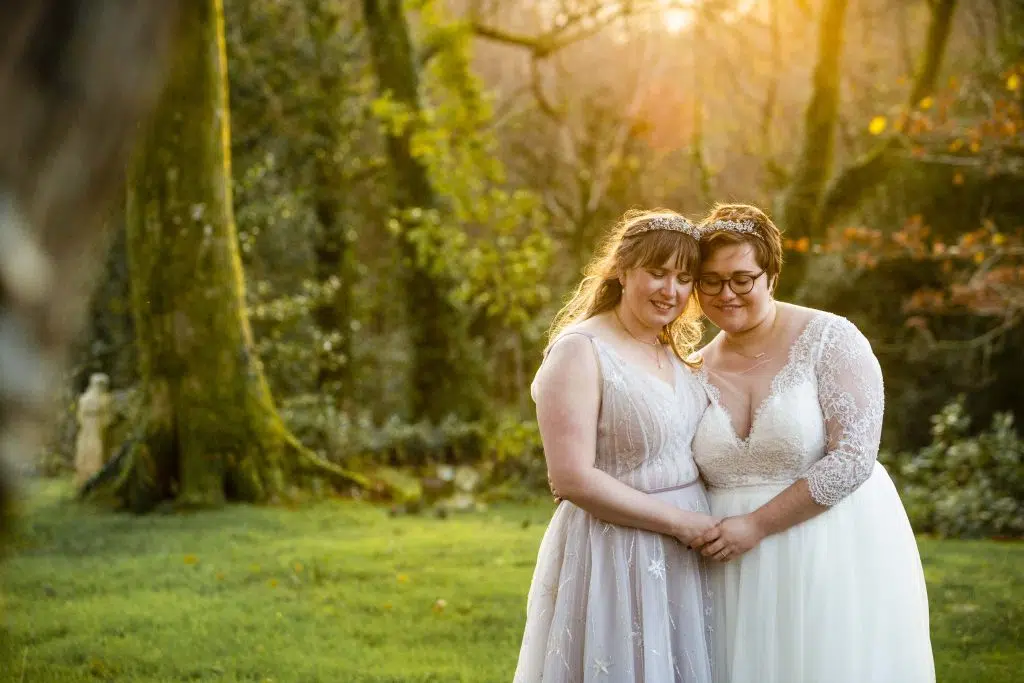
Another tradition you can put your own spin on is style and what you wear. You can both wear the same colour (and that does not have to be black or white). Do not feel pressure for you to dress according to ideas of being masculine or feminine, or in relation to your role within your relationship – perceived or actual.
Our outfits and style choices have a huge impact on how we feel and how we carry ourselves. Feeling like the most elevated, confident version of you should be at the centre of your wedding outfit choices.

How to Find LGBTQ+ Inclusive Wedding Suppliers
When it comes to finding inclusive suppliers, I always recommend you start by looking for just one supplier you trust and relate to. Once you find one vendor who makes you feel seen and celebrated, they will no doubt be able to signpost you to other queer wedding professionals and allies who would be delighted to help to bring your wedding day into reality.
So, how do you find that one supplier?
Check for inclusive language on websites and social media – terms like ‘nearlyweds’ and ‘couple’ rather than bride and groom. I would also advise looking at imagery – not just on a photographer’s website, but all vendors’ marketing materials – to see if they have worked with a diverse range of couples.
A good wedding supplier should make space for pronouns during the enquiry process, whether that’s on their enquiry form or at another point before booking. It shouldn’t be your responsibility to have to raise this yourself.
There are many ways a wedding vendor can show that they are inclusive: their language and imagery, but also the posts and content they share from other inclusive suppliers.
A consultation prior to booking is always advised for every supplier you book. Ask them about their experience working with queer couples, and whether they have undergone any training or supported the community in any way.
Some vendors, like me, will have lived experience not just of being part of the LGBTQ+ community but also of planning their own wedding. Do not underestimate how valuable their insight can be.
Read reviews and look for recurring themes and feedback such as ‘feeling comfortable’ or ‘put at ease’.
As I have already mentioned, there are so many fabulous suppliers out there and so there is never a need to compromise on your wedding day. Here are a few of my favourites.
Freckles & Flowers (Florist)
Hawthorne & Ivory (Stationery)
Laura Baker Productions (Videographer)
EllaBella Events (Wedding Planner)

Family, Friends & Your Wedding Guest List
I understand first-hand the challenges faced by some couples when involving certain family members as part of their wedding celebrations. Not every loved one is as understanding and supportive of queer love as we would like them to be.
Sometimes you may feel pressure to invite people based on obligation or family dynamics, but ultimately your happiness and peace of mind needs to come first.
If not inviting certain family members will cause too much fallout and drama, then ensure that your friends and chosen family provide a support buffer throughout wedding planning and on the day itself.

Why Choose an LGBTQ+ Experienced Wedding Photographer?
There are many advantages to booking a wedding photographer with experience of photographing LGBTQ+ couples.
Most importantly, they will make sure you feel safe and comfortable to express yourselves and your love openly and honestly in their presence. They will avoid gender-specific posing and portrait compositions, instead ensuring both of you shine in every shot.
A great wedding photographer will also enable you to lean into what feels right for you and welcome your input and feedback throughout the process, providing you with a sense of both comfort and ownership when it comes to your wedding imagery.
Ultimately, you want to be photographed in a way that captures the two of you deeply in love and immersed in the moment, rather than being captured as a certain type of couple.
You can read more about my experience as a queer wedding photographer here.
Worried About Being Photogenic?
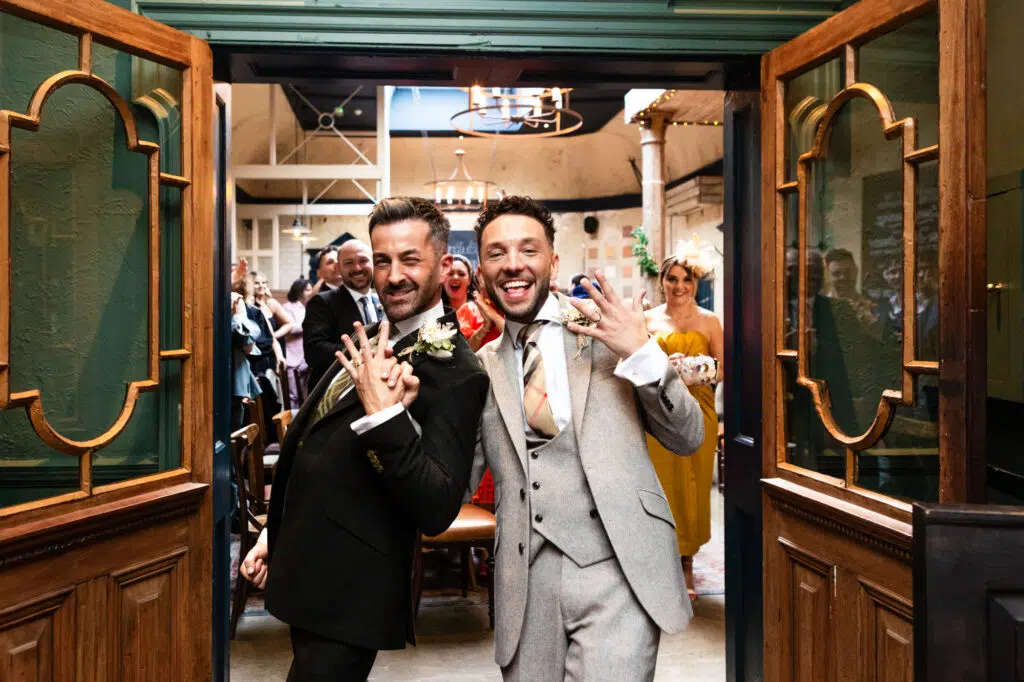
Worrying about not being photogenic or being awkward on camera is a common concern, not restricted to members of the LGBTQ+ community.
However, I understand that there are some specific body confidence issues faced by queer people, and I want to reassure you that your body type, gender identity or how you express yourself should never negatively impact how you feel when being photographed on your wedding day.
If you would like a little more guidance on feeling more confident on camera, you can read my guide to feeling comfortable on camera or for more in-depth guidance and advice please sign up to my free Wedding Confidence email series here.
A Wedding That Feels Like You
I hope that this blog has calmed some of your nerves and given you some positive ideas for curating a wonderful wedding day.
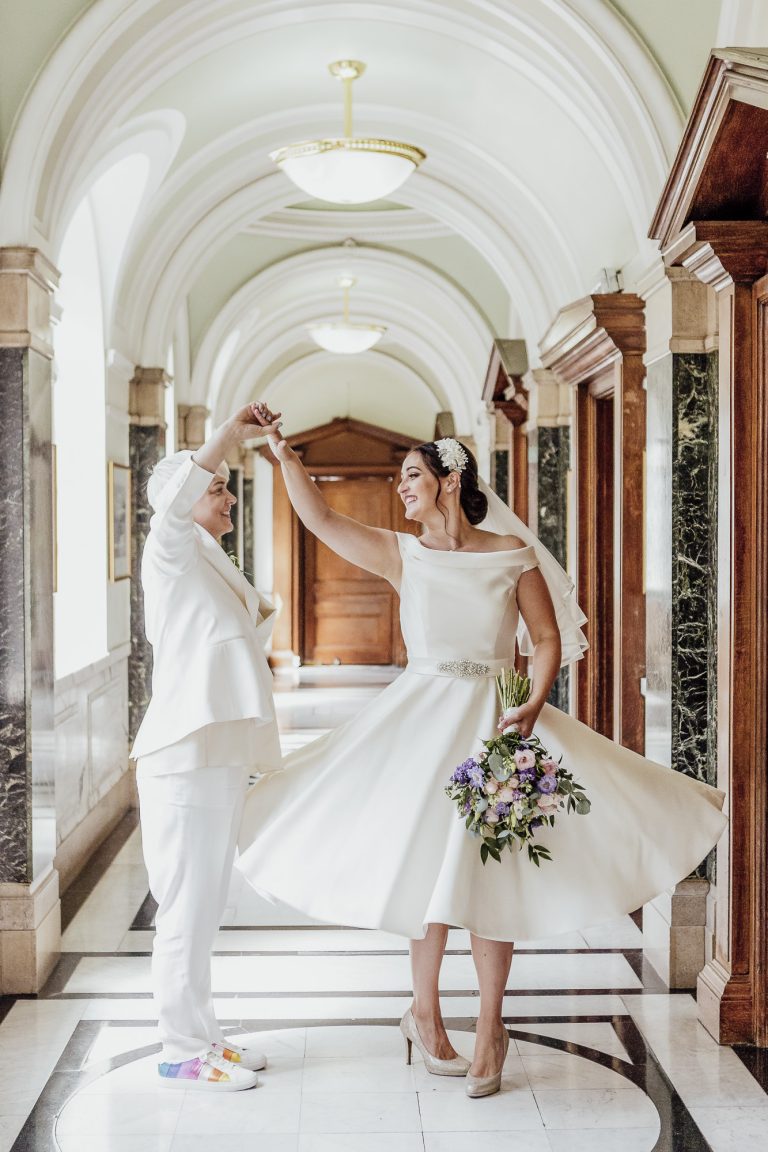
As you plan your wedding day, try not to ask, “What does a queer wedding look like?” but, “How do we want to feel on our day?” Then work backwards from there.
Your wedding doesn’t need to represent the entire LGBTQ+ community. It simply needs to celebrate you.
LGBTQ+ wedding planning FAQS
Do LGBTQ+ couples have to follow traditional wedding traditions?
No. Wedding traditions are not rules, and very few things that happen at a wedding are legally necessary. You can keep the traditions you love, adapt them to suit you, or leave them behind completely. Whether you walk down the aisle together, get ready together or separately, exchange rings or have speeches is entirely up to you.
How can I find LGBTQ+ friendly wedding suppliers?
Start by looking for suppliers whose language, imagery and previous work make you feel seen and represented. Look for inclusive language such as ‘couple’ and ‘nearlyweds’, rather than assumptions about brides and grooms, and look at their social media and reviews. A consultation before booking is also a good opportunity to ask about their experience working with queer couples.
Will you ask about our pronouns?
A good wedding supplier should make space for pronouns during the enquiry process, whether that’s on their enquiry form or at another point before booking. It shouldn’t be your responsibility to have to raise this yourself. Being asked and having your pronouns respected should be a normal part of an inclusive wedding experience.
Are trans couples welcome?
Absolutely. Trans couples are welcome here. If you have particular concerns or preferences about how you are represented, spoken about or photographed, I’d encourage you to talk to me — or any supplier you are considering — about them before booking. You should feel confident that your identity and your wishes will be respected throughout the process.
Do you photograph non-binary couples?
Yes. All LGBTQ+ couples are welcome here, and I don’t make assumptions about gender roles or how you should be represented in your photographs. If you have particular preferences around how you would like to be photographed or represented, we’ll discuss those together before the wedding.
Will we be comfortable being affectionate in front of our photographer?
You should be. I understand how it feels to let go of my husband’s hand in certain environments because of a fear of judgement, and I know that feeling can stay with you. Your wedding photography should be a space where you can express your love openly and honestly without worrying about how someone else might react.
What if some of our family members aren’t supportive of our relationship?
You don’t have to include anyone in your wedding simply because of family expectations. Your happiness and peace of mind should come first. If excluding certain family members would create significant fallout, make sure you have supportive friends and chosen family around you throughout the planning process and on the day itself.
Can we include or exclude certain family members from group photographs?
Absolutely. Before the wedding, I ask couples for a list of the group photographs they would like, as well as asking about any family dynamics I should be aware of. This means we can plan different combinations of people where needed, so that the people you want included are included and potentially difficult situations can be handled discreetly.
What if I’m worried about being awkward or not photogenic?
You’re certainly not alone. Many people worry about being photographed, regardless of their sexuality or gender identity. Your photographer should help you feel comfortable rather than making you feel that you need to perform for the camera. Your body type, gender identity or how you express yourself should never negatively affect how you feel being photographed.
Does a queer wedding have to be unconventional?
Not at all. Queer does not have to mean quirky, alternative or unconventional. You can have a beautifully traditional wedding if that’s what you love, or create something completely different. There is no particular way an LGBTQ+ wedding should look.
SHARE YOUR WEDDING PLANS WITH ME
If you’re planning your wedding and want to chat about how I would capture your day with empathy and creativity, please click below. I’ll be in touch within 24 hours with more information.